| Software high availability cluster
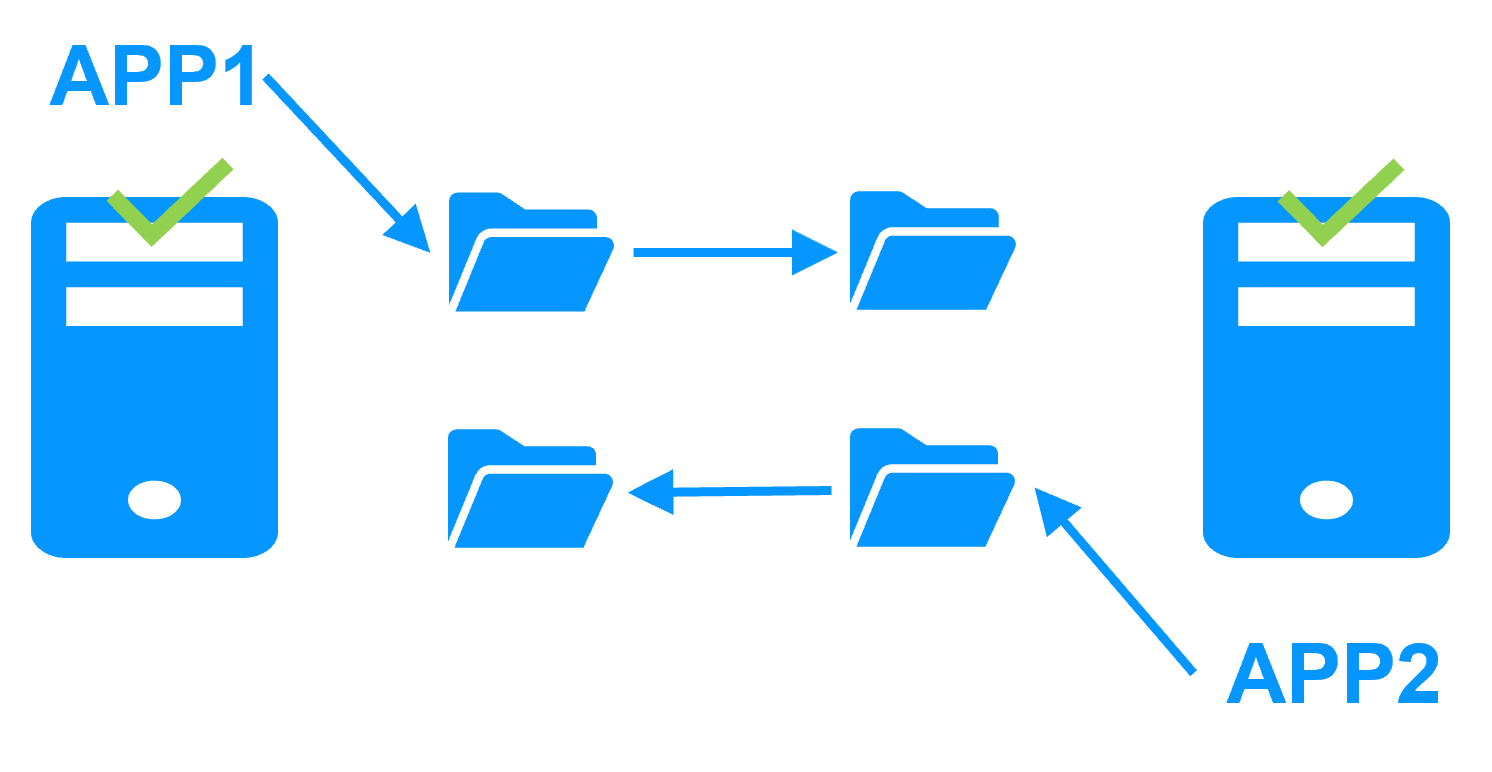
|
Fault-tolerant system
|
| Product |
| SafeKit on Windows and Linux |
Fault tolerant products |
| Hardware / hypervisor |
| No dedicated server, no dedicated hypervisor.
Works with the standard and free hypervisor of Windows, Hyper-V, included in Windows kernel for servers and PCs.
Works with the standard and free hypervisor KVM (Kernel-based Virtual Machine) integrated in mainline Linux kernel.
Each server can be the failover server of the other one for multiple applications. |
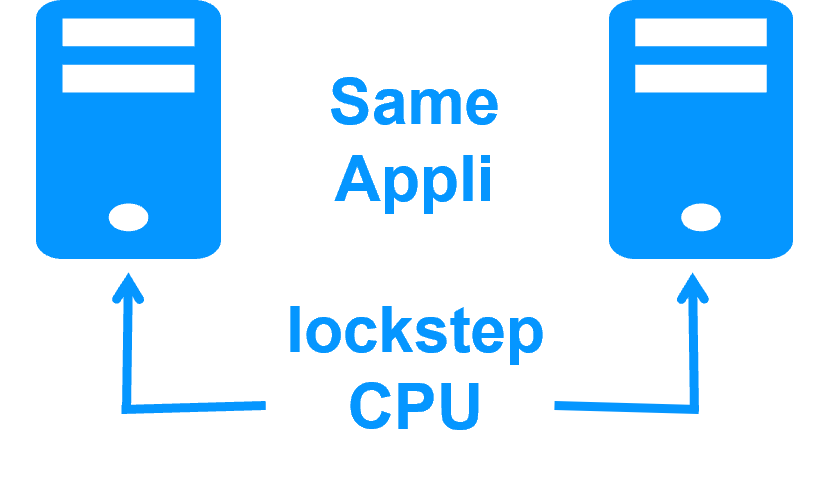
Dedicated hardware or dedicated hypervisor.
The secondary server is dedicated to the execution of the same application synchronized at the instruction level. |
| Software failure |
| Software failure supported with restart in another OS environment. |
Software exception on both servers at the same time on the same OS. |
| Smooth upgrage/fix of application and OS |
| Yes
Smooth upgrade/fix of application and OS possible server by server.
N and N+1 versions can coexist. |
No
Same application and OS image on both servers. |
| RTO/RPO |
| The recovery time with SafeKit (RTO) depends on the time to detect and to restart the application (about 1 minute).
The data loss with SafeKit (RPO) is zero as the replication is synchronous. |
The recovery time (RTO) of a fault tolerant system is zero.
The application is not restarted in case of failure and continue its execution on the secondary server.
The data loss (RPO) is also zero. |
| Flexibility |
| Can run on any type of server with standard Windows and Linux OS |
Depends on specific hardware or on specific hypervisors |
| Suited for |
| Software editors which want to add a simple high availability option to their application |
Environment where hardware failures is the main concern |